
Keep every SEND pupil
connected to learning, even when school feels impossible
For pupils with complex needs, absence is rarely a simple choice. AV1 gives schools a flexible, low-pressure way to maintain connection, reduce anxiety, and support inclusion, one pupil at a time.
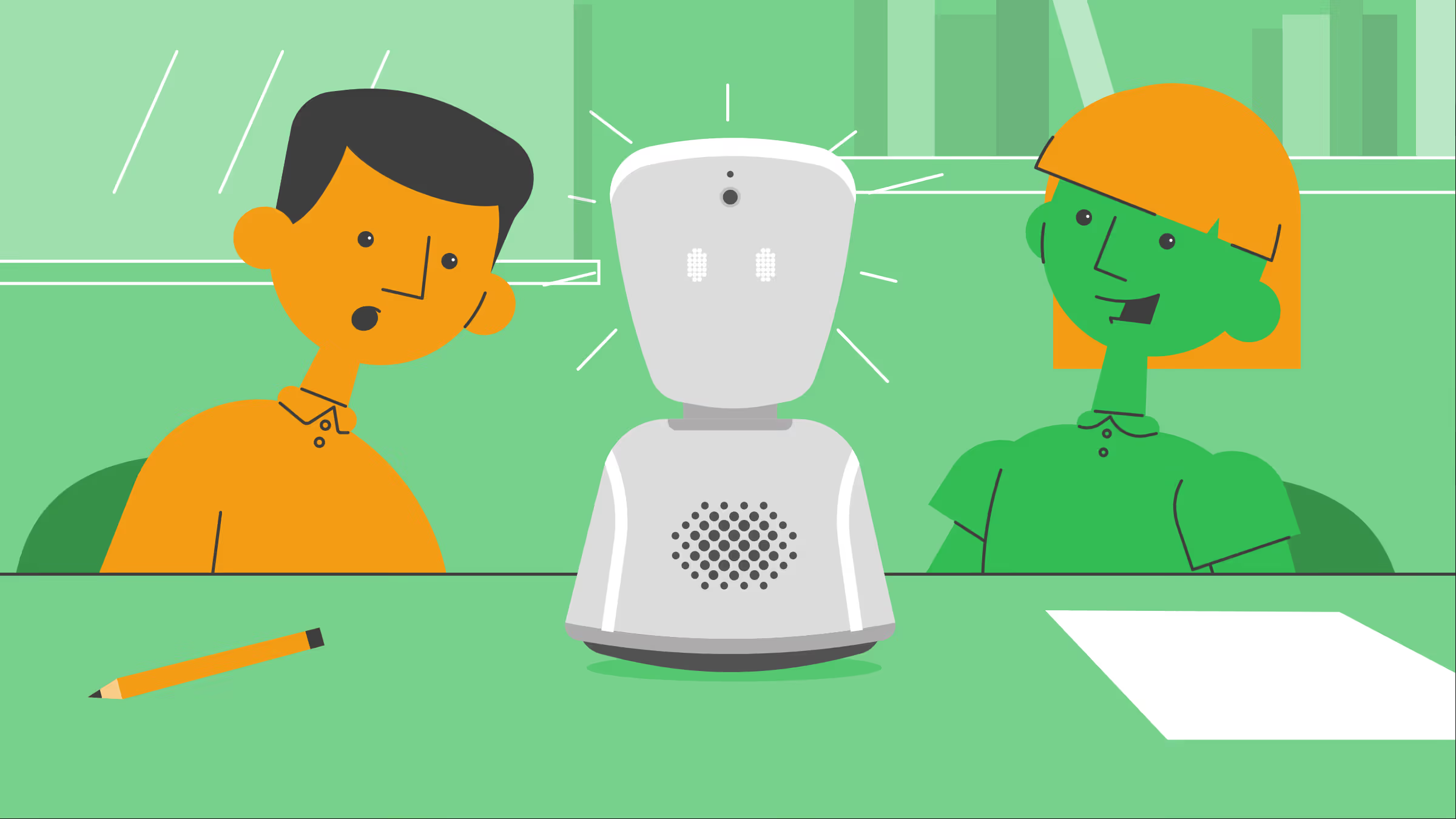

Attendance is rarely straightforward for SEND pupils
A pupil with autism who finds the noise of the corridor unbearable. A child with SEMH needs whose anxiety peaks at the school gate. A young person on a reduced timetable who is slowly losing their connection to classmates and to learning itself.
For many SEND pupils, the barriers to attendance are not a lack of willingness. They are sensory, emotional, physical, or rooted in the unpredictability that mainstream school life brings. Yet the systems around attendance often treat absence as binary: in school, or not.
This results in pupils who are technically on roll, but practically disengaged. Their needs may be documented in EHCPs and supported by dedicated staff, but their relationship with school is quietly fraying.

Common barriers
Sensory overload
Noise, proximity, unpredictability, and the sensory demand of a full classroom can be genuinely overwhelming for pupils with autism, ADHD, or sensory processing differences.
Anxiety and EBSA
For pupils with SEMH needs, reaching the school gate can feel genuinely impossible. Emotionally Based School Avoidance is a real and debilitating experience that standard interventions rarely resolve.
Transitions and unpredictability
Changes to routine, supply teachers, new rooms, returning after a break can destabilise pupils who rely on structure. Any disruption to familiar patterns can trigger a significant setback.

Social pressure
The social demands of classroom life, group work, transitions, peer interaction can feel overwhelming for pupils whose needs make sustained social engagement exhausting.
Physical and health barriers
Physical disabilities, fatigue, or the demands of managing a complex health need alongside a SEND diagnosis can reduce a pupil's capacity to sustain a full school day, even when they are otherwise ready to learn.
How gradual disconnection becomes long-term absence
Disengagement among SEND pupils rarely happens all at once. It builds slowly, each day that feels too hard leaves a slightly larger gap between the pupil and their school community.
Reduced timetables become the default
What starts as a short-term adjustment can harden into a long-term arrangement. Without an active bridge back into full attendance, part-time provision can become permanent by default rather than design.
Peer relationships fade
Friendships and social familiarity erode quickly during absence. For SEND pupils who already find social connection requires effort, the gap widens rapidly, making a return feel increasingly daunting, not less.
EHCP outcomes become harder to evidence
Curriculum access, progress toward EHCP targets, and engagement in learning all depend on some form of connection to school. Absence without an alternative provision makes evidence gathering and achieving outcomes significantly harder.
Risk of exclusion or alternative provision
Without targeted support, SEND pupils with complex needs face a higher risk of managed moves, fixed-term exclusions, or referral to alternative provision, outcomes that affect long-term outcomes and are difficult to reverse.
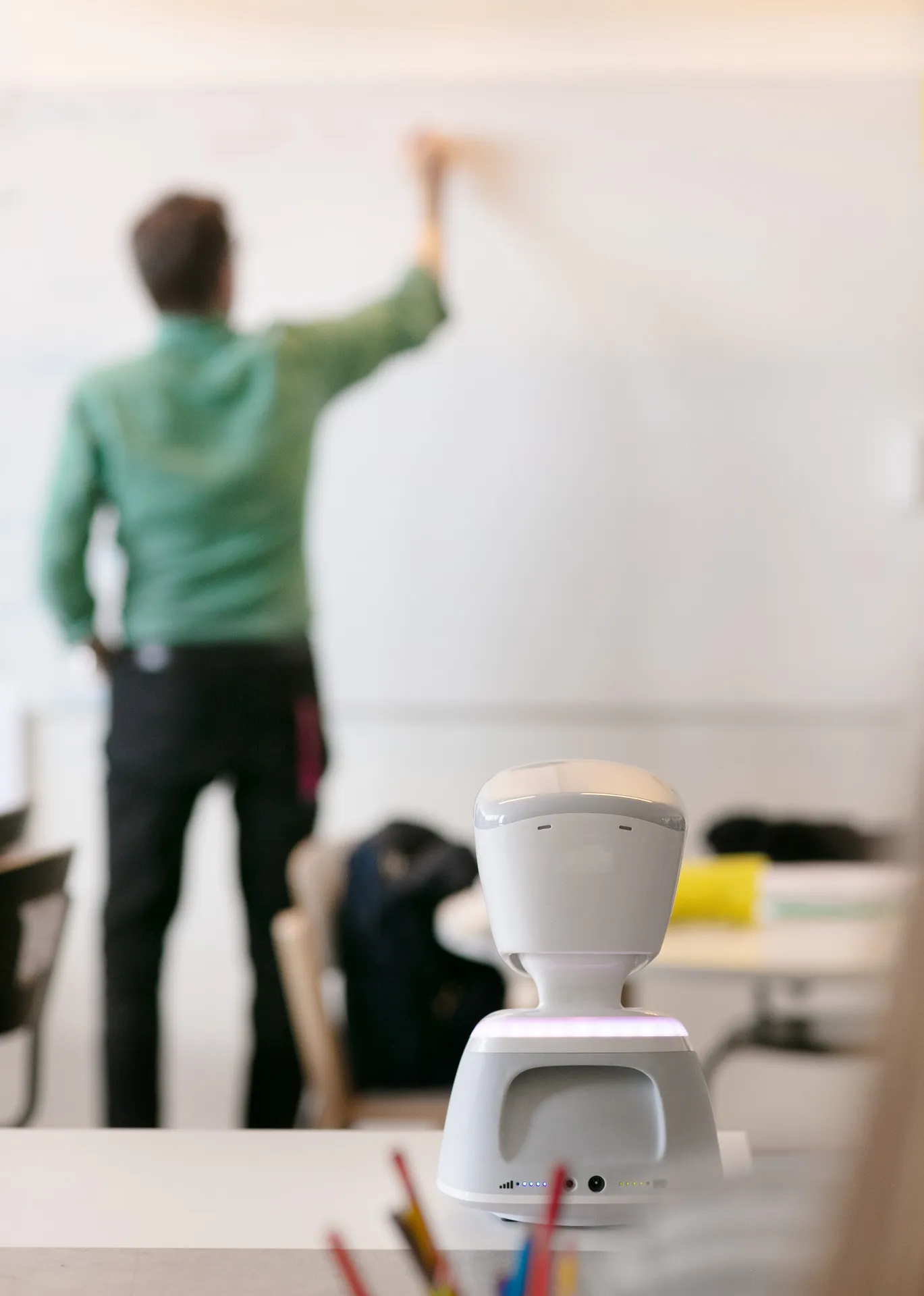
Connection without pressure
AV1 is a compact telepresence robot that sits in a pupil's usual seat in the classroom. Using a smartphone or tablet, the pupil joins their lesson from wherever they are, seeing and hearing their class in real time, and participating when they are ready.
For SEND pupils, what makes AV1 different from a video call is not the technology. It is what the technology makes possible. There is no camera pointing into the pupil's home. They can observe quietly, raise a virtual hand when they want to contribute, or simply listen, without performing or being watched.
AV1 does not replace in-person learning. It keeps the door open to it, maintaining connection during the times when full attendance is not yet possible.
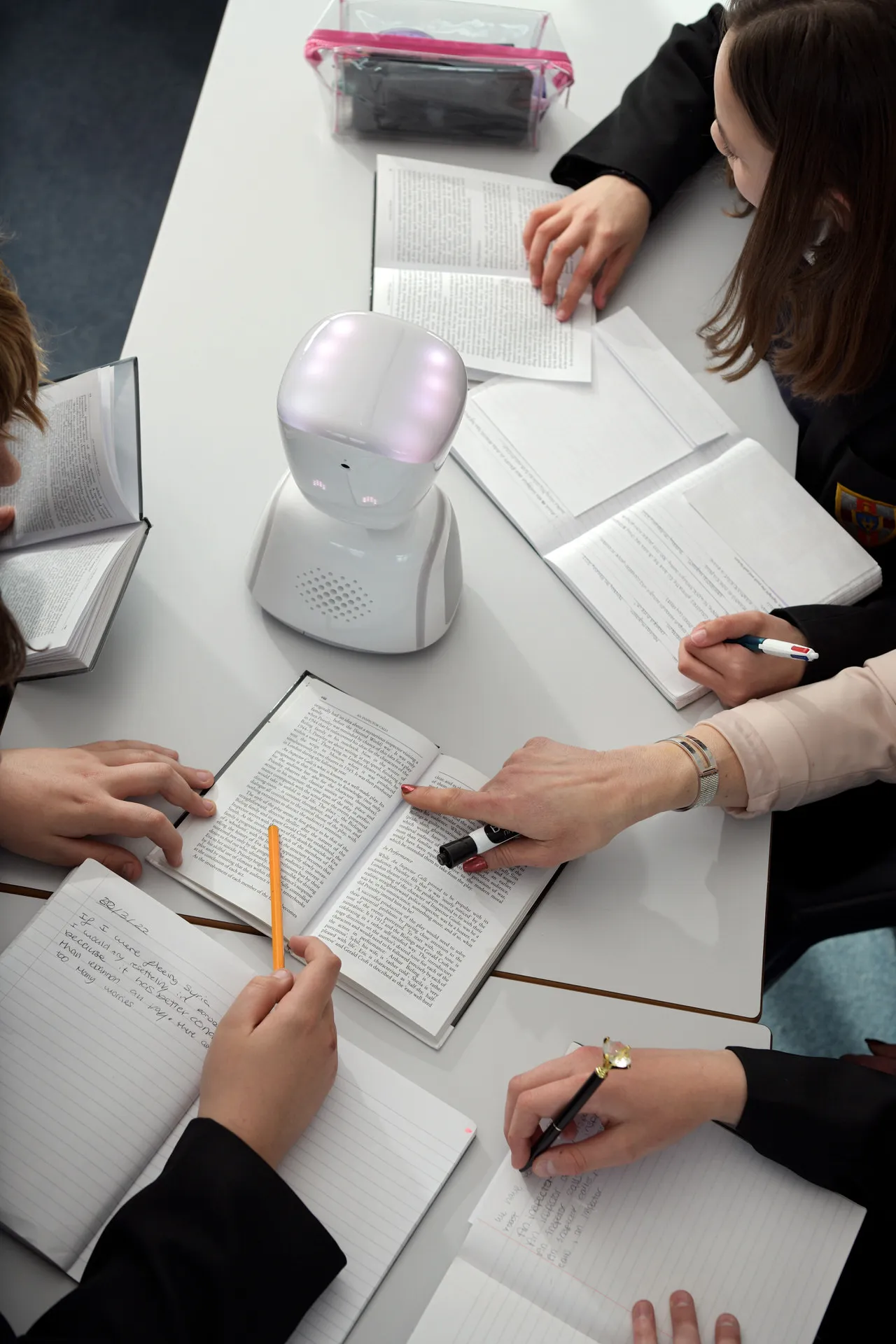
Flexible inclusion, built around the individual
Attend from wherever they are ready to be
Whether that is at home, in a quiet room within school, or the car on the way to an appointment, AV1 keeps the pupil present in their classroom without requiring them to be physically there.
Observe before they participate
For pupils who need time to process and build readiness, AV1 allows them to be in the room without any pressure to engage immediately. The hand-raise function lets them signal readiness in their own time.
Peer relationships are maintained
Classmates hear a familiar voice, see a familiar presence, and can talk during pair and group work. The social thread, often the first casualty of absence stays intact throughout.
Schools already using AV1 for SEND pupils
.jpg)
"AV1 allows pupils to be present in school on their own terms, with control over where they look, when they engage – without requiring anything they are not ready to give"

"If students aren’t able to succeed with traditional approaches, you have to try something different. If a piece of technology can help a student access education when they otherwise couldn’t, it’s worth it"

"It's about them feeling they're still part of us, even when they can't be in the room. That's what helps them come back"
When does AV1 fit into SEND provision?
AV1 is not a single-use tool. It works across a wide range of SEND and inclusion contexts – whenever full in-person attendance is not currently achievable, and connection needs to be maintained.
Schools use it as part of planned inclusion strategies, as an early intervention tool, and as a structured pathway back into the classroom. It can be as short-term or as sustained as the pupil's needs require.
Reduced or part-time timetables
AV1 covers the sessions a pupil is not yet attending in person, maintaining their connection to learning and class throughout the adjusted period.
EBSA and anxiety linked to SEND
For pupils whose school avoidance is rooted in sensory or emotional barriers, AV1 offers a lower-pressure route to presence and gradual re-engagement.
Supporting transitions
Moving year group, returning after absence, or joining mid-year, AV1 allows pupils to observe and familiarise before they attend in person.
Named EHCP provision
AV1 can be formally embedded within an Education, Health and Care Plan as a tool for maintaining curriculum access, with usage documented as evidence.
On-site sensory support
A pupil can be in a calm space within school and access their classroom through AV1, present and connected, without the overwhelm of a full classroom environment.
Structured reintegration pathways
AV1 can form a defined step in a managed return plan, building classroom familiarity, confidence, and routine before moving to full in-person attendance.
Results schools can show to inspectors
AV1 is used by over 4000 schools across the UK and internationally. The outcomes are consistent: maintained curriculum access, improved reintegration rates and, critically, data that SENCOs can put in front of an inspector.