
When a pupil is absent from school, they still belong there
For pupils living with serious illness or injury, absence is unavoidable but disconnection doesn't have to be. AV1 keeps pupils connected to their class, their teachers, and their school identity throughout treatment and recovery.

What prolonged medical absence actually looks like for schools
A pupil is diagnosed with cancer, a student fractures their spine, a teenager with severe IBD is admitted to hospital for the third time this term. Each scenario is different but the challenge for schools is often the same.
These are not cases of truancy, they are not preventable, and they rarely follow a predictable pattern. Pupils move between hospital wards, home, and periods of partial attendance. Recovery can take weeks or months, and many conditions fluctuate, a pupil may be well enough to engage at the start of the week, only to be too unwell a few days later.
Fragmented provision
Schools are expected to maintain educational continuity but may be working across hospital education services, outreach tutors, and pastoral staff simultaneously.
Inconsistent visibility
The longer a pupil is absent, the more invisible they become to staff, to peers. They may start to feel invisible themselves. Safeguarding and wellbeing concerns increase as contact becomes less frequent.
Reintegration anxiety
After an extended absence, returning to a classroom full of pupils who've moved on socially and academically can feel overhwhelming. Many pupils delay their return or disengage entirely.
Staff capacity stretched thin
SENCOs, pastoral leads, and inclusion staff are coordinating multiple agencies while trying to keep the pupil's connection to school alive. Without the right tools, this is unsustainable.

Missed lessons are only part of the problem
Loss of peer relationships
Friendships shift quickly in school. A pupil absent for several months can return to find their friendship group has changed. The social cost of long-term absence is rarely acknowledged but it is deeply felt.
Anxiety and school avoidance
The longer a pupil is away, the more the idea of returning feels overwhelming. Anxiety about what's changed, who knows what, and how to 'catch up' can become a barrier larger than the illness itself.
Widening reintegration gap
Every week of disconnection makes the eventual return harder. What begins as a temporary absence can become a long-term exclusion from normal school life with serious implications for outcomes and wellbeing.
A consistent, low-pressure connection back to school
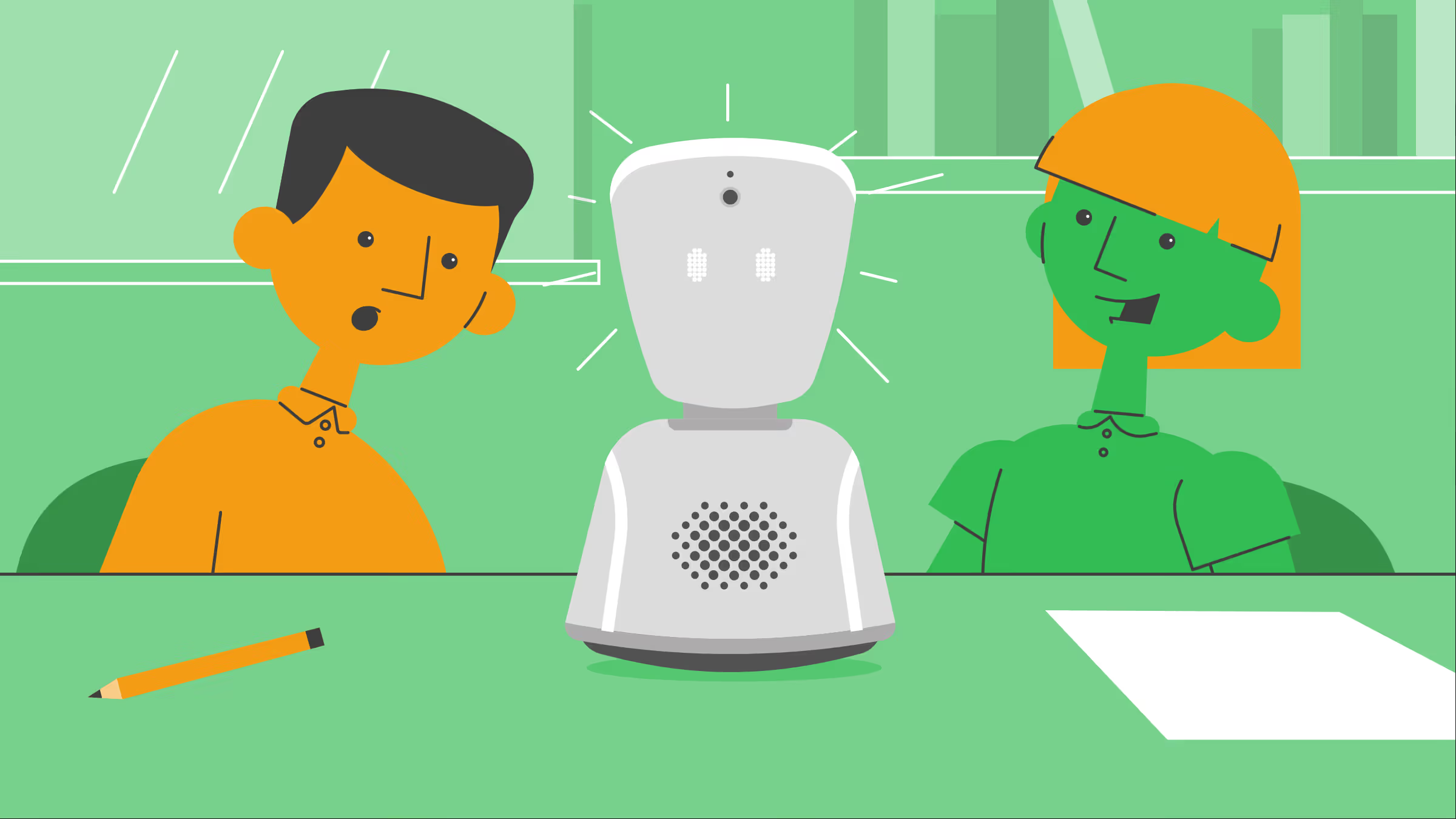
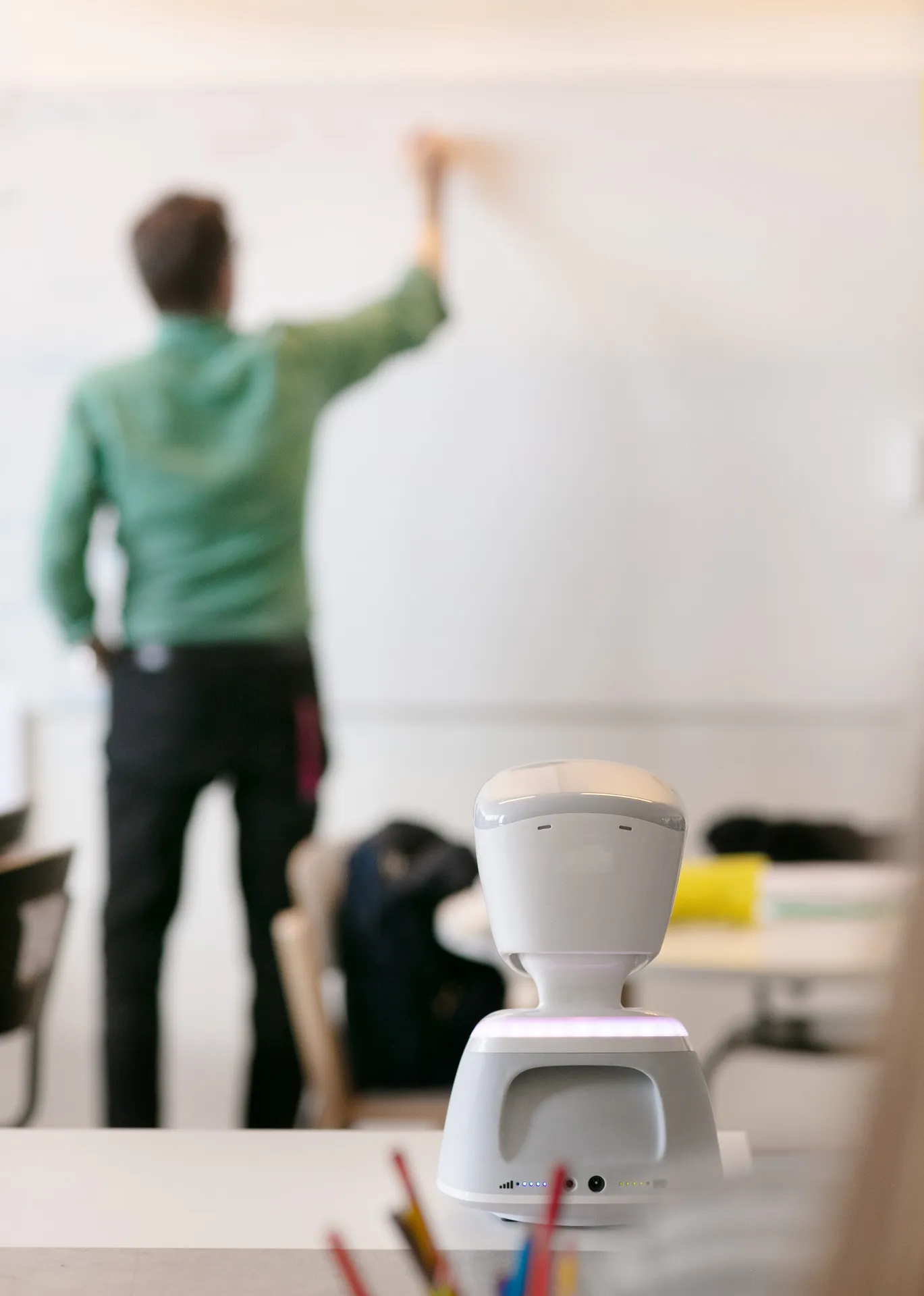
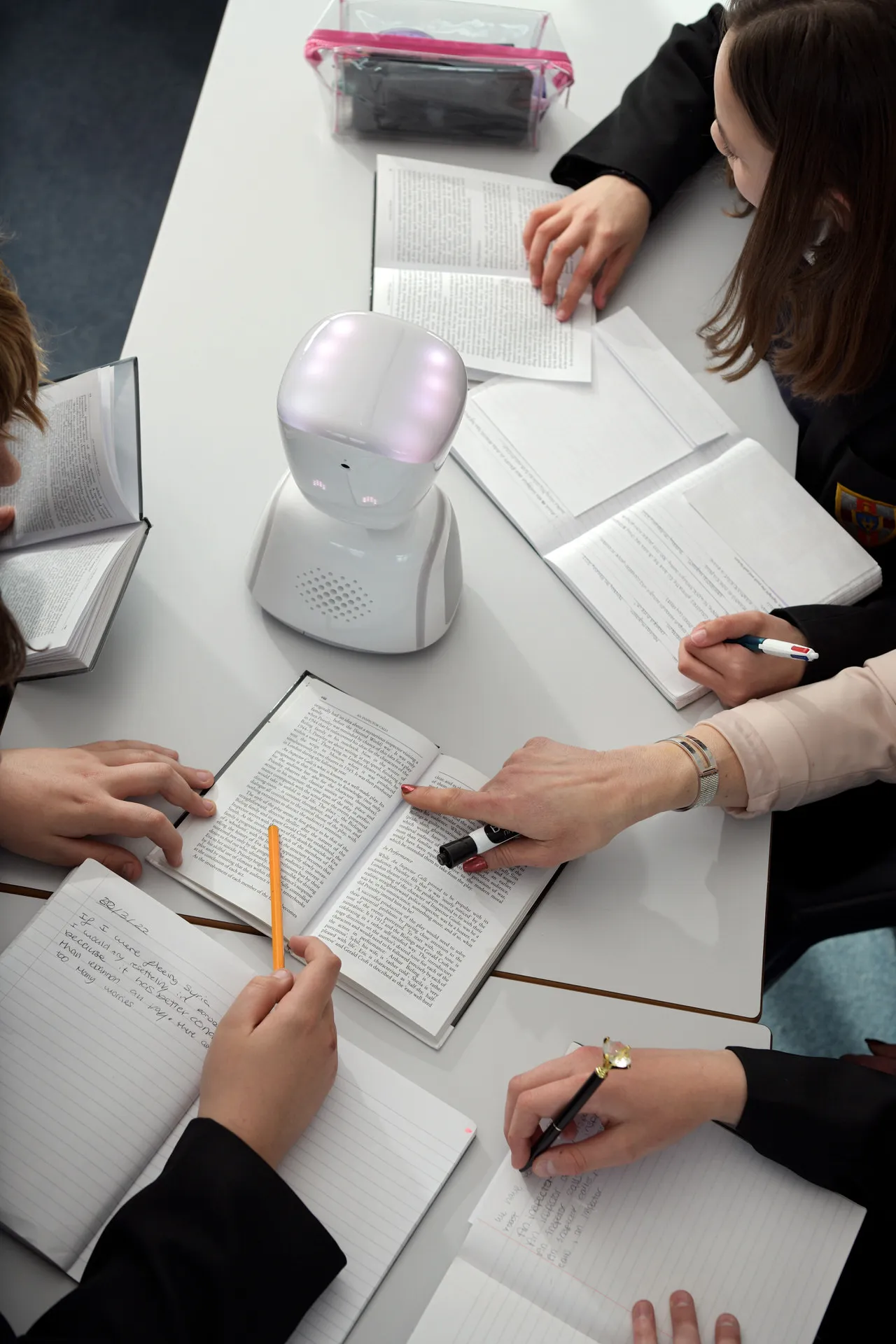
AV1 is a compact telepresence robot that attends school on behalf of a pupil. It sits in the classroom, participates in lessons, and gives the pupil a live, two-way connection to their school day, from hospital, from home, or from wherever they are receiving care.
The pupil sees and hears the classroom through AV1's camera and speaker. They can respond, raise a virtual hand, or quietly observe when their energy is low. The robot is not a screen on a stand, it's a considered presence that signals to teachers and classmates: this person is still part of us.
Unlike video conferencing tools, AV1 requires no technical set-up from teachers, no login links to manage, and no disruption to the lesson. It works in the background, giving the pupil agency to engage on their own terms.
Simple for staff, meaningful for pupils
AV1 is placed in the classroom
The robot sits at the pupil's usual seat or a designated place in the room. It charges overnight, and in the morning the teacher switches it on. The pupil chooses when to connect.
The pupil connects from anywhere
Using a tablet or phone, the pupil logs into the AV1 app and immediately sees and hears the classroom. They choose when to engage or observe as privacy settings allow them to watch and listen without being visible.
The lesson continues naturally
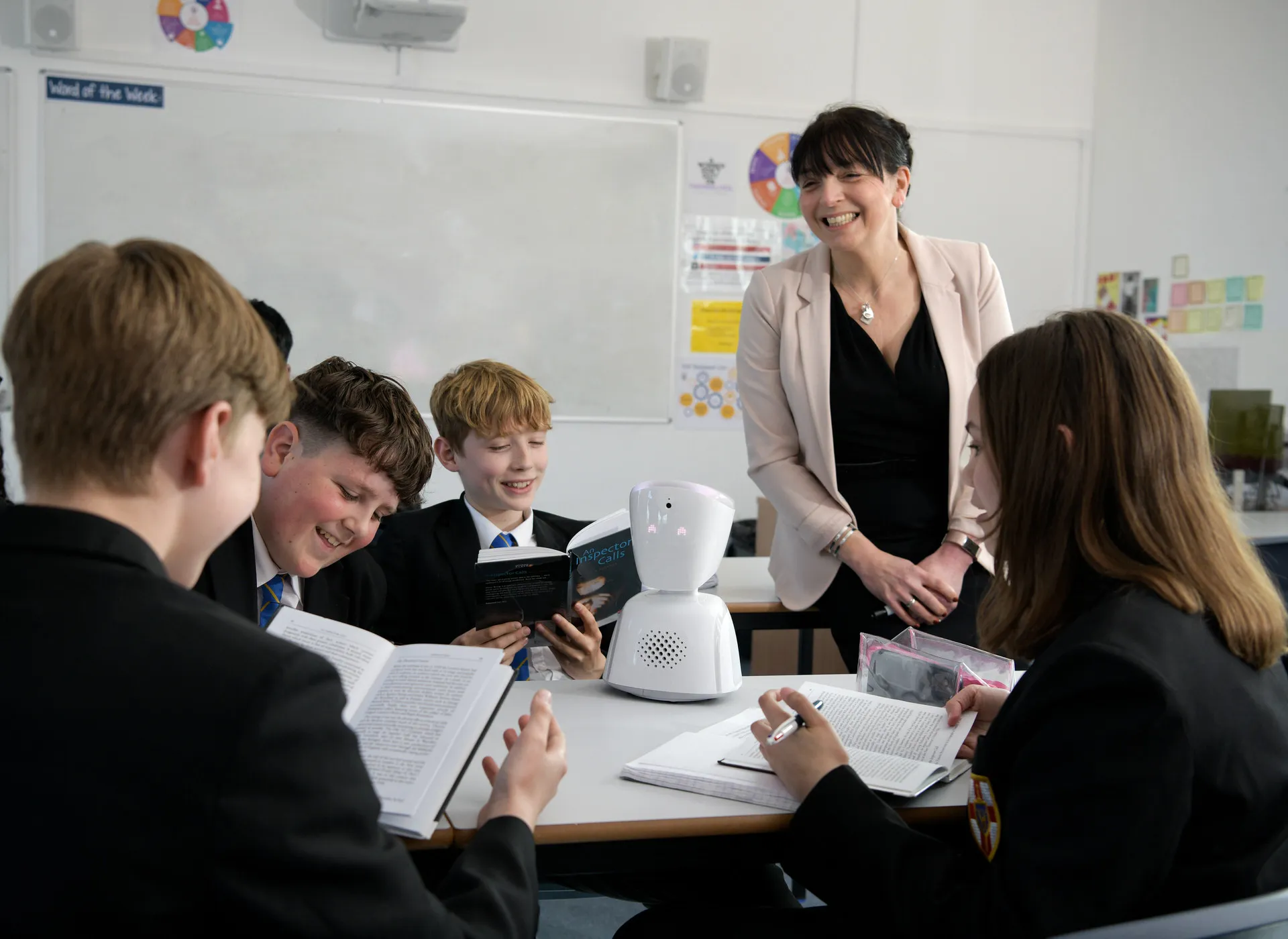
Teachers include AV1 as they would any other pupil, asking questions, sharing materials, acknowledging contributions. No special protocols, no technical interruptions.
Bridges the gap to reintegration
Pupils who have stayed connected through AV1 know what's happening in class, maintain friendships, and feel familiar with the classroom environment, making the return to school far less daunting.
Works across settings
Whether a pupil is at home recovering, in a hospital ward, or attending a specialist outreach setting, AV1 connects to any setting with internet access.
What happens when schools use AV1

"The biggest impact was possibly at break times when he could chat with his friends and see what was going on around them. He was going through a lot and he could enjoy some respite laughing and joking with his friends"
"Without the robot the transition back to school would have been far tougher as the student would be dealing with a mental recovery as well as a physical one. I think he would have felt very disengaged with what was going on at school. The interaction with his peers and teachers meant that it didn’t really feel like not being there."

“I did a class assembly the day before the student was due to log on. I showed them the robot and their faces lit up. The next day the student logged on. As soon as they heard the student’s voice coming through they stopped seeing it as a piece of tech and quickly accepted it as the student.”
When to deploy AV1 for somatic illness
During hospital admissions
Pupils admitted for treatment, surgery, or observation can connect to their classroom from a hospital bed. Even intermittent participation helps maintain relationships and reduce the psychological impact of absence.
During home recovery
When pupils are recuperating at home but not well enough to attend in person, AV1 provides a structured, social connection to the school day, without the pressure of performing or being assessed.
For fluctuating conditions
Conditions such as CFS, lupus, JIA, or severe IBD mean some days are manageable and others are not. AV1 lets pupils connect on their own terms, full participation when possible, quiet presence when not.

As part of reintegration planning
Pupils using AV1 during absence arrive back at school having maintained social bonds and familiarity with classroom life. Schools can plan a phased return with greater confidence, reducing the risk of relapse or refusal.
Alongside hospital education services
AV1 does not replace hospital teaching, it complements it. Hospital education services can focus on academic catch-up whilst AV1 maintains the social and emotional connection to their school.
Results schools can show to inspectors
Around 5000 AV1s are used in schools across the UK and internationally. The outcomes are consistent: maintained curriculum access, improved reintegration rates and, critically, data that SENCOs can put in front of an inspector.